Lehi Flooded Basement Cleanup
You walk downstairs to grab something from storage and your foot hits water. Maybe it's a thin sheet across the concrete. Maybe the carpet squishes. Maybe it's ankle-deep and rising. Either way, you now have a flooded basement, and the next hour matters more than you might think.
We answer 24/7/365, and a crew can often be at your door within the hour.

Emergency Basement Flood Cleanup in Lehi, Utah
As easy as 1, 2, 3

Call Us, Day or Night
Tell us what happened. We answer 24/7/365 and dispatch from our office on State Street in Lehi, so a crew can often be at your door within the hour, anywhere from Traverse Mountain to the neighborhoods near Utah Lake.
Call (385) 484-0777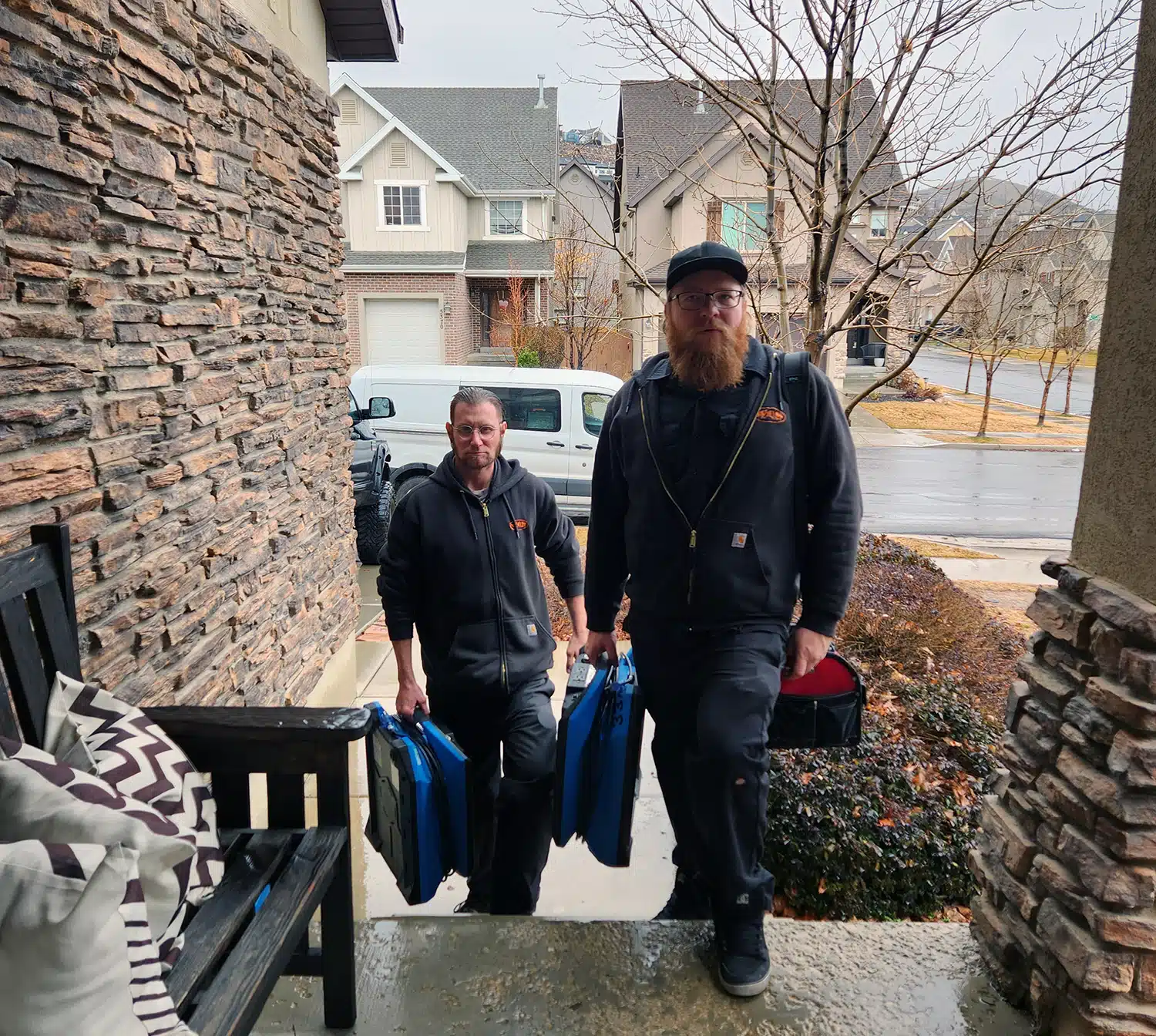
We Pump It Out & Dry It Right
Submersible pumps and truck-mounted extractors remove the standing water. Then industrial dehumidifiers, air movers, and HEPA scrubbers dry the framing, subfloor, and slab back to standard, with daily moisture checks until our meters say it's done.
See how we work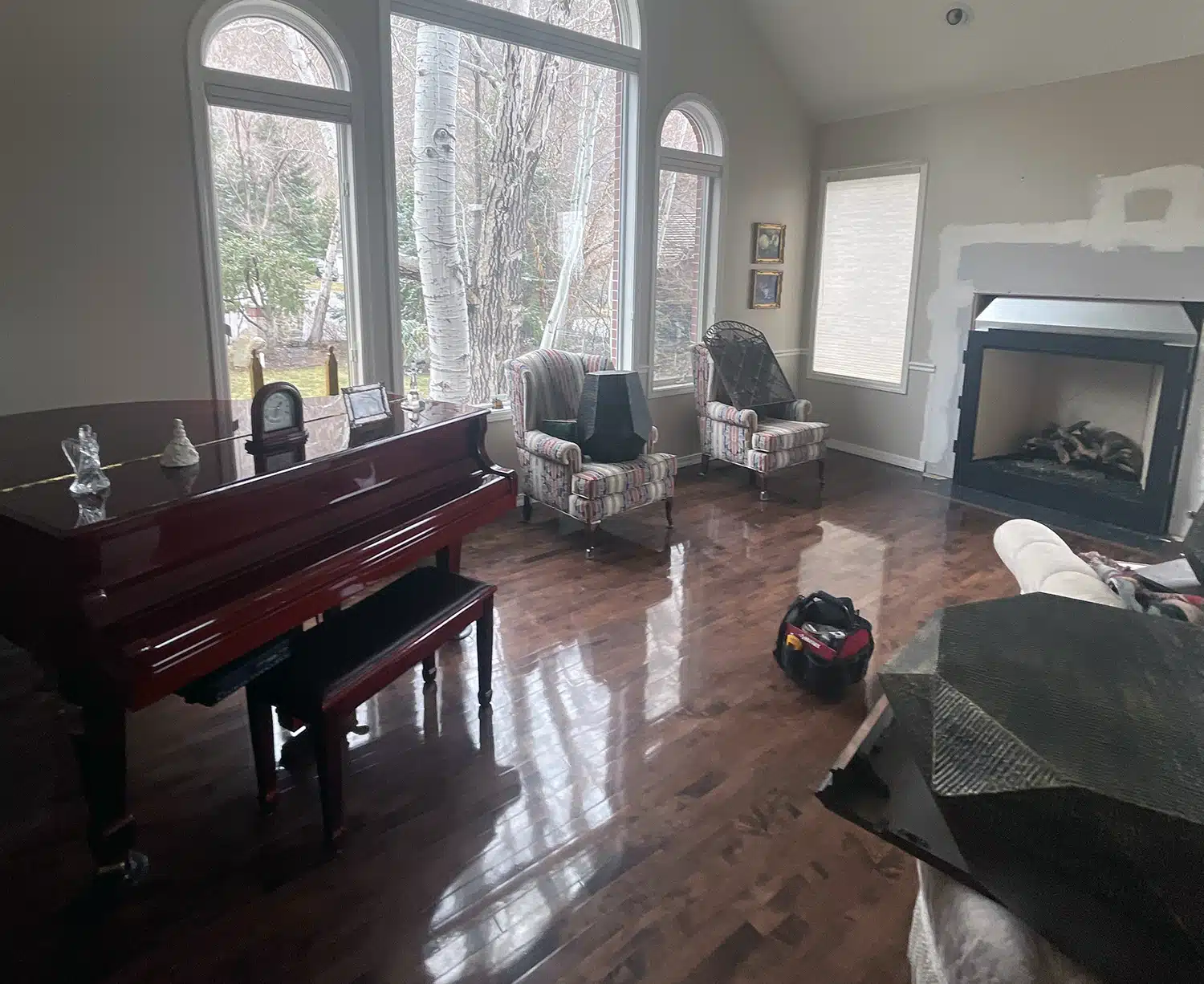
We Rebuild & Handle the Insurance
Drywall, flooring, trim, paint. One company from the first phone call to the last coat, and we document everything in Xactimate and bill most carriers directly so you're not chasing paperwork.
See our before & after resultsStanding water and electricity are a deadly combination, and every hour of delay lets water wick deeper into drywall, subfloor, and framing. Here is exactly what to do the moment you find water in your Lehi basement.
1. Stay out of the water until you know it's safe
If the water is anywhere near outlets, appliances, the furnace, or the electrical panel, do not walk through it. Shut off power at the main breaker if you can reach it without stepping in water. If you can't, wait for a professional.
If the water smells like sewage or came up through a floor drain, treat it as contaminated. Keep kids and pets out of the basement entirely.
2. Stop the source if you can
If a pipe burst or an appliance failed, shut off the main water valve to your home. Most Lehi homes have the main shutoff in the basement near where the water line enters, or outside near the meter. If groundwater or runoff is the source, there's nothing to shut off. Move on to the next step.
3. Call for emergency basement flood cleanup
This is the step people delay, and it's the one that leads to further damage and expensive repairs. Water wicks into drywall, subfloor, and framing within hours. Mold can start colonizing wet materials within 24 to 48 hours. Every hour of delay increases the risk of mold growth and structural damage.
Water Damage Specialists dispatches around the clock as an emergency response. Call (385) 484-0777 and tell us what happened. We'll have a crew heading your way for emergency water extraction with the water extraction and drying equipment needed to start water damage restoration.
4. Document everything
Take photos and video before anything is moved. Capture the water level, the source if you can identify it, and every affected area. Your insurance company will want this, and it protects you if there's any dispute about the scope of damage. Good insurance documentation also helps clarify coverage and your out-of-pocket repair costs. Standard homeowner's insurance rarely covers flooding unless you have a separate flood policy.
5. Move what you can, but don't overdo it
If it's safe, get valuables, electronics, documents, and furniture up off the floor or out of the basement. Don't try to haul out soaked carpet, drywall, or heavy items yourself from the affected areas. Porous materials involved in sewage cleanup often need special handling instead of DIY removal. That's part of professional basement water removal, and doing it wrong spreads contamination and can hurt your back.
6. Call your insurance company
Report the loss promptly. Flood repair costs vary based on the extent of basement damage. Late reporting is one of the most common reasons claims get denied. We work with all major carriers and can bill most of them directly, so once you've opened the claim, we can handle much of the back-and-forth for you. Severe flooding can lead to thousands in repair costs, which is why quick reporting matters.
Call (385) 484-0777 now. We're open 24/7, even holidays.
Lehi sits in a spot that makes basement flooding more common than most homeowners expect. A few reasons:
High water table
Large parts of Lehi, especially the lower areas closer to the Jordan River and Utah Lake, sit above shallow groundwater. During wet years, that water rises and pushes against basement floors and foundation walls. Homeowners who've never had a problem suddenly find water seeping through the slab.
Spring runoff
Snowmelt off the Wasatch and Traverse ranges turns April through June into flood season across Utah County. Runoff saturates the soil, overwhelms drainage, and finds its way into basements through window wells, foundation cracks, and floor joints.
Sump pump failure
A lot of Lehi homes depend on a sump pump to stay dry. When the pump fails, loses power, or simply can't keep up, the basement fills fast. Many homeowners don't find out the pump is dead until it's too late.
Plumbing failures
Burst supply lines, failed water heaters, and broken washing machine hoses are the most common causes of water in basements year-round. In winter, frozen pipes in unfinished basement areas and crawl spaces are a constant source of calls.
Sewer backups
When a main sewer line clogs or the city system surges during heavy rain, wastewater can back up through basement floor drains and fixtures. This is the most dangerous kind of basement flooding, and it needs to be handled as a biohazard, not a cleanup job.
Secondary water and irrigation
Lehi's pressurized irrigation season runs into the fall. Broken lines, stuck valves, and oversaturated lawns next to the foundation send water straight into basements, often at 2 a.m. when the sprinklers run.
Most of the expensive basement flood repairs we see started with a well-meaning shortcut. Here's what to avoid.
Don't rent a shop vac and call it done
A shop vac pulls surface water. It cannot keep a basement dry because moisture remains below the surface in carpet pad, subfloor, and the bottom of your drywall. What looks dry on Saturday is growing mold by Wednesday.
Don't run box fans and hope
Household fans move air across surfaces but don't pull moisture out of structural materials. In Utah's dry climate, people assume things will dry on their own. Wall cavities and subfloors, including hidden moisture, don't.
Don't wait to see if it goes down on its own
Groundwater flooding sometimes recedes, but the damage is already done. The materials it touched still need proper drying to help prevent serious issues.
Don't tear out materials before documenting
Rip out that carpet before photographing it and you've just made your insurance claim harder to prove.
Don't touch sewage water without protective gear
Category 3 water carries bacteria and pathogens that cause serious illness. This is not a job for household gloves and bleach.
Not sure what you're dealing with? Call (385) 484-0777 and we'll walk you through it.
When homeowners search "basement flood cleanup near me," they're usually picturing someone showing up with a pump. That's step one, but it's a small part of the entire process, which should lead to complete restoration, not just water removal. Here's what a proper emergency basement flood cleanup involves and why it should include basement flood repair.
Assessment
Our technicians identify the source, classify the water (clean, gray, or black), and perform a thorough damage assessment to map how far the moisture has traveled. We use penetrating moisture meters and thermal imaging cameras to find water behind walls and under floors that you can't see. This determines everything that follows. The inspection follows IICRC standards used in professional water damage restoration.
Extraction
Submersible pumps handle standing water as the first step in water extraction. Professional pumps can remove thousands of gallons per hour. Truck-mounted and portable extractors pull water out of carpet, pad, and hard surfaces down to the slab. The goal is to remove as much liquid water as possible before the drying equipment goes in, because every gallon we extract is a gallon the dehumidifiers don't have to pull out of the air, and rapid extraction helps limit water intrusion and reduce additional basement damage.
Removal of unsalvageable materials
In a flooded finished basement, carpet pad, saturated drywall, wet insulation, and swollen baseboard usually need to come out. With contaminated water in a finished basement, porous items that cannot be disinfected should be discarded after flooding. We use dustless demolition techniques and full containment to keep the mess and any spores from spreading to the rest of your home.
Structural drying
This is where most companies cut corners. We use professional drying to protect your home's structural integrity, then place high-velocity air movers and industrial dehumidifiers strategically throughout the basement. These units matter in Utah because standard dehumidifiers struggle to pull moisture in our already-dry air. HEPA air scrubbers run alongside to capture airborne particles and mold spores. The drying process typically takes 3 to 5 days on average, depending on conditions.
We come back daily to track moisture levels and adjust equipment, because daily moisture monitoring is essential to prevent mold. The gear stays until our meters confirm the framing, subfloor, and slab are back to dry standard, not just dry to the touch. Antimicrobial treatment remains effective during this stage, and professional drying helps prevent mold growth, structural damage, and supports complete structural drying.
Antimicrobial treatment and sanitization
Before anything gets closed up, exposed framing and surfaces get treated with EPA-registered antimicrobial agents, with mold remediation included where contamination or lingering growth is present. Hard surfaces are also cleaned with a mixture of water and detergent to help prevent mold growth before or alongside antimicrobial treatment. For sewage or runoff-contaminated water, this step is non-negotiable and includes post-remediation air quality clearance to help confirm hidden mold has been addressed.
Documentation for your claim
Every job includes the restoration process with before, during, and after photos, daily moisture maps, and a Xactimate estimate built in the same software your adjuster uses. When the documentation is right, the photos and moisture maps record affected areas and support insurance documentation throughout the entire process, helping claims move faster and get paid fairly.
Reconstruction
Once the basement is dry and clean, we rebuild it: drywall, flooring, trim, paint. One company from the first phone call to the last coat of paint, so you're not coordinating three different contractors.
When disaster strikes, basement flooding doesn't wait for business hours, and neither do we. Water Damage Specialists is open 24/7/365, including holidays, with crews ready to dispatch across Lehi, Saratoga Springs, and all of Utah County.
24/7 Emergency Line
Water wicks into drywall, subfloor, and framing within hours, and mold can start colonizing wet materials within 24 to 48 hours. When you call, we dispatch a crew with the pumps, extractors, and drying equipment needed to start basement water removal immediately.
We understand how stressful water damage can be. Free estimates, most insurance accepted, and a local team that will be there fast.
Call (385) 484-0777 now. We're open 24/7, even holidays.
Prevention Services
We offer plumbing inspections, drain cleaning, hydro jetting, sewer camera inspections, and sump pump evaluations for homeowners who'd rather prevent a flood than clean one up. Water damage prevention is always cheaper than water damage restoration.
Current Offers
- $50 off any service (mention coupon at time of booking)
- $100 off any plumbing repair (mention coupon at time of booking)
- $175 off shower valve replacement (mention coupon at time of booking)


Why Lehi Homeowners Call Water Damage Specialists
Water Damage Specialists has been handling basement flooding in Lehi since 2007. Our office is right here on State Street, and our crews have pumped out hundreds of basements from Traverse Mountain to the neighborhoods near Utah Lake.
There are plenty of options when you search for basement flood cleanup in Utah County. Here's what sets us apart:
- We're actually local. Our office is at 257 E State St in Lehi. When you call, you reach a local team that knows the soil, the water table, and the neighborhoods, not a national call center, and we provide services in Lehi every day.
- We've done this since 2007. Eighteen-plus years of Utah basements, spring runoff, frozen pipes, and sewer backups. Other restoration companies refer their overflow to us.
- Restoration and plumbing under one roof. If a burst pipe or failed water heater caused the flood, our licensed plumbers fix the source while our restoration crew starts extraction. One call, one crew, one set of documentation.
- Certified and licensed. Our IICRC certified technicians follow industry standards in the field, and we also hold Utah State License #7033426-5501, RIA Certified Restorer status, a BBB rating, and HomeAdvisor Top Rated recognition.
- Insurance handled. We work with all major carriers, bill most of them directly, and advocate for you if a claim gets underpaid as part of our water damage restoration Lehi service.
- Background-checked crews. The people walking into your home have been vetted, because protecting your home's most valuable asset starts with trust.
Preventing the Next Basement Flood
Once your basement is dry, a few steps go a long way toward keeping it that way:
- Test your sump pump every few months by pouring water into the pit. Consider a battery backup so a power outage during a storm doesn't leave you defenseless.
- Add a basement flood alarm for early warning if water starts collecting where you may not see it right away.
- Extend downspouts at least 5 to 6 feet away from the foundation and make sure the grade slopes away from the house to protect your home's foundation. Healthy drainage systems matter, because poor drainage around the home is a common cause of water flooding basement areas.
- Check window wells for debris and make sure they have covers and working drains.
- Inspect irrigation lines near the foundation, and set sprinklers so they're not soaking the ground against your basement walls.
- Replace rubber washing machine hoses with braided stainless steel every five years or so.
- Insulate pipes in unfinished basement areas and crawl spaces before the first hard freeze.
- Schedule a sewer camera inspection if you've had slow drains or any backup history. Catching a root intrusion early beats sewage in the basement, especially when lehi basement flooded risks rise during storms and heavy rain if backups are ignored.
We offer plumbing inspections, drain cleaning, hydro jetting, and sump pump evaluations for homeowners who'd rather prevent a flood than clean one up.
Water in Your Basement Right Now? Call Us.
When disaster strikes, basement flooding doesn't wait for business hours, and neither do we. Water Damage Specialists is open 24/7/365, including holidays, with crews ready to dispatch across Lehi, a Lehi basement emergency, Saratoga Springs, and all of Utah County for storm damage.
We understand how stressful water damage can be. Call (385) 484-0777 or visit wdsofutah.com to request reliable basement flood repair. Free estimates, most insurance accepted, and a local team that will be there fast.
Complete Restoration & Plumbing Services in Lehi