Orem Water Softener Installation & Repair
Licensed Orem plumbers. Free water test, salt-based and saltless options, written pricing before work begins.

Water Softener Installation & Repair in Orem, Utah
As easy as 1, 2, 3

Give Us a Call
Day or night, just pick up the phone. Tell us what happened and we'll have a team headed your way anywhere in Orem, often within the hour. Free estimates available during standard service hours.
Get help now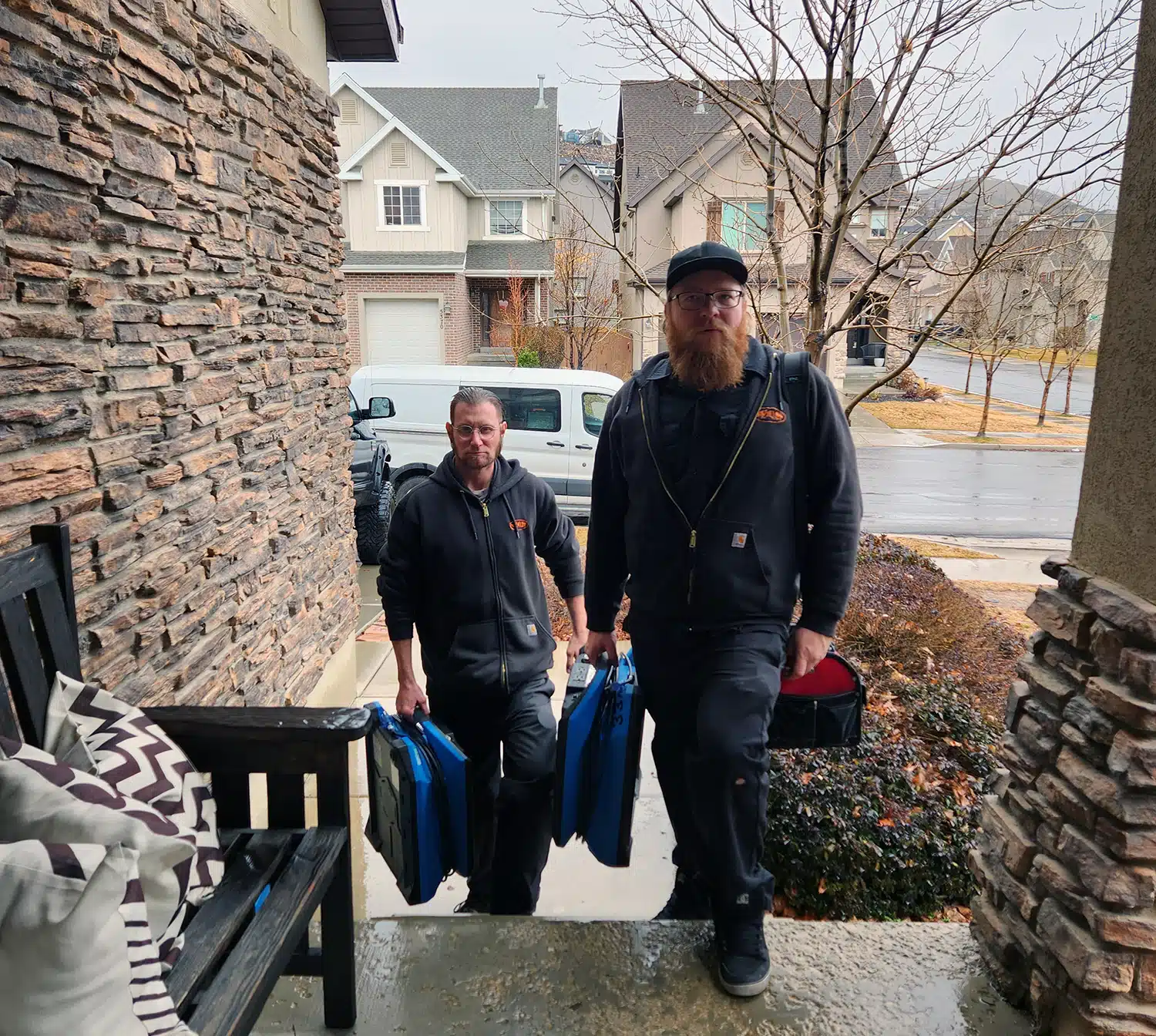
We Show Up & Handle It
Our plumber tests your water, checks the main line and drain, and gets to work. New softener, repair or replacement, whatever it takes. You don't have to figure anything out. That's our job.
See how we work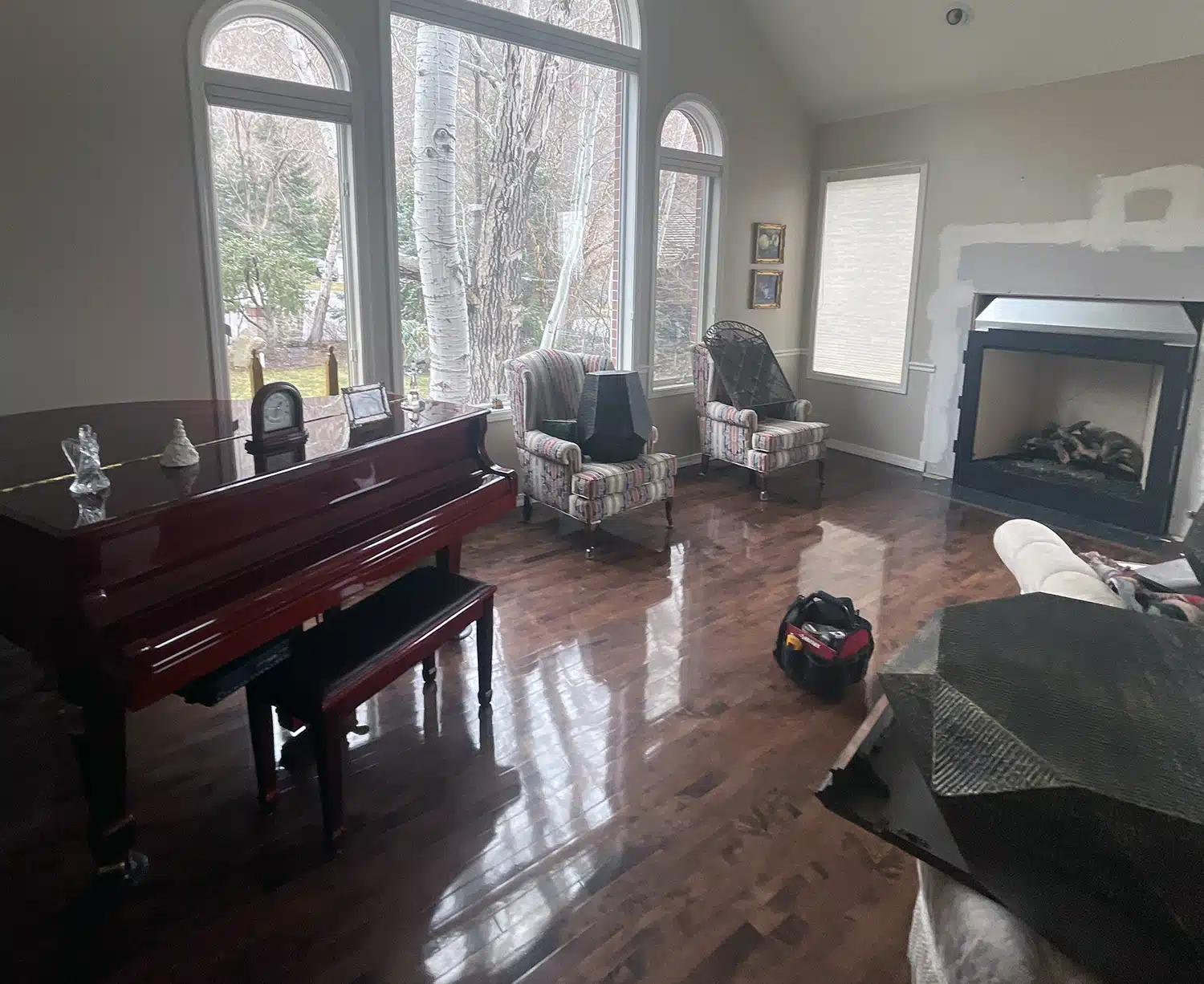
Get Back to Normal
We program the softener to your water and walk you through salt, settings and maintenance. If a leak reached the floor, we restore that too. We even work with your insurance directly so you're not stuck dealing with paperwork. Simple as that.
See our before & after resultsServing Orem residents since 2007. Family-owned and Utah County based, not a national franchise or an out-of-state call center. Our neighbors are our customers.
Why Orem Homeowners Call Us for Water Softeners
- Licensed Utah plumbers (Contractor License #7033426-5501). A softener ties into your main water line, and it should be installed by a plumber.
- Free water test. We size the softener to your tested hardness and household, not to the biggest unit on the truck.
- Written pricing before work begins.
- Salt-based and saltless options, with a plain explanation of what each one does and does not do.
- Full-service plumbing. Water heaters, filtration and reverse osmosis, and drain cleaning from the same company.
- HomeAdvisor Top Rated. Read our reviews.
Water Softener Service Near You in Orem
Our shop is at 981 W 400 S in Orem. We install and service water softeners in every Orem neighborhood, including the Orem bench, Cherry Hill, Sharon Park, Northridge, Lakeridge, Suncrest, Cascade, Windsor, Timpanogos and the area around UVU, plus Vineyard, Lindon and Provo. See all service areas.
Water Softener Repair in Orem
Softeners are reliable, but they do fail. Call us if you notice:
- Water feels hard again even though the salt tank is full
- The salt level never goes down
- A salt bridge or salt mush in the brine tank
- The brine tank is full of water or overflowing
- The unit runs constantly or will not regenerate
- Low water pressure through the whole house
- Resin beads in faucet aerators or the toilet tank
- Salty-tasting water after a regeneration
- Leaks at the control head, bypass valve or tank
- Error codes or a blank display
Common repairs are clearing salt bridges, cleaning or replacing the injector and screen, and replacing the control valve, motor, piston and seals, float assembly, brine line or resin bed.
Water Softener Leaking? Do This First
- Turn the bypass valve on the softener to bypass. Water keeps flowing to the house but not through the unit.
- Unplug the softener so it does not start a regeneration.
- If water is still coming out, close the main shutoff valve.
- Call (385) 483-0987. We answer 24 hours a day.
If the leak reached drywall, flooring or a finished basement, our water extraction crew can start drying on the same visit.
Repair or Replace?
On a softener under about 10 years old, repair usually makes sense. Past 10 to 15 years, when the repair is a control valve or resin bed, we give you the repair price and the replacement price side by side and let you choose.
What Hard Water Does to an Orem Home
Hard water damage builds slowly and then shows up all at once. Scale settles in the bottom of a tank water heater, insulates the burner or element from the water, and makes the heater run longer and fail sooner. It coats tankless heat exchangers, blocks dishwasher and washing machine valves, seizes shower valves and wears out toilet flappers and faucet cartridges.
When Scale Damage Becomes Water Damage
Because Water Damage Specialists is also a water damage restoration company, we have dried out plenty of basements flooded by a water heater or supply line that scale wore out. A softener costs far less than that cleanup. If something has already failed and leaked, we handle it:
- Emergency water extraction and structural drying
- Emergency plumbing and water heater replacement
- Mold remediation if the leak went unnoticed
- Drain cleaning for scale-clogged lines
Insurance and Hard Water Damage
A sudden failure, such as a burst water heater tank, is usually covered by homeowners insurance. The worn-out appliance itself and slow leaks usually are not. We document the loss with photos and moisture readings and can bill most carriers directly.
Water Softener Installation in Orem
Our water softener installation includes:
- A free hardness test and sizing based on your household and water use
- Connection at the main line or softener loop so the whole house is protected
- A bypass valve so the unit can be serviced without shutting off the water
- Drain and brine line routing with an air gap at the drain
- Outdoor hose bibbs left on hard water for irrigation where the plumbing allows
- Programming to your tested hardness, and a walkthrough on salt, settings and maintenance
A softener needs three things nearby: the main water line, a drain and, for digital models, an outlet. Garages and utility rooms are the usual spots. In older Orem homes with no softener loop, we cut one into the main line.
What Changes After Installation
- No new scale on faucets, glass and showerheads, and existing scale slowly clears
- Spot-free dishes and brighter, softer laundry with less detergent
- Soap and shampoo lather with about half as much product
- Water heaters, dishwashers and tankless units run cleaner and last longer
Water Softener Cost in Utah
Typical pricing for Utah homeowners:
| Water softener repair | $150 to $1,200 |
| Water softener replacement (existing loop) | $1,200 to $8,500 |
| New water softener installation (new loop and drain) | $1,800 to $6,500 |
| Combination softener and filtration | $2,500 to $15,500 |
| Under-sink reverse osmosis | $400 to $2,200 |
Price depends on the size and grade of the unit, whether a softener loop already exists, the distance to a drain, and whether plumbing has to be re-routed. Every job starts with a free estimate and a written price.
Water Softener Services in Orem
- Free water hardness testing
- Salt-based water softener installation and replacement
- Saltless water softener and conditioner installation
- Digital metered, twin-tank and non-electric softeners
- Softener loop, drain line and bypass installation
- Hot-water-only softening where a whole-house loop is not practical
- Water softener repair: control valves, motors, injectors, floats, brine lines
- Salt bridge removal and brine tank cleaning
- Resin replacement and resin cleaning
- Annual maintenance and settings checks
- Combination softener and carbon filtration systems
- Whole home filtration and reverse osmosis
Get a Free Water Test and Estimate
Call (385) 483-0987, open 24/7/365
Prefer not to call? Send us a message.
Water Damage Specialists, Inc.
Hard Water in Orem, Utah
Orem's water is a blend of treated river water, mountain springs and deep wells, and it tests hard to very hard. Hardness varies by neighborhood and season, so we test the water at your tap before recommending anything. Water Damage Specialists installs, repairs and replaces water softeners across Orem from our shop at 981 W 400 S, with licensed Orem plumbers.
Free water test. Written pricing before work begins. Licensed and local since 2007.
Signs of hard water in an Orem home:
- White crust on faucets, showerheads and glass shower doors
- Spots and film on dishes straight out of the dishwasher
- Soap and shampoo that will not lather, and soap scum on tubs and tile
- Dry skin and dull hair after showering
- Stiff, faded laundry
- A rumbling water heater or less hot water than you used to get
- Frequent repairs to dishwashers, ice makers, humidifiers and tankless water heaters
Types of Water Softeners We Install in Orem
Salt-Based Water Softeners
A regular water softener uses ion exchange. Hard water passes through a tank of resin beads that hold calcium and magnesium and release a small amount of sodium or potassium in exchange. When the resin is full, the softener rinses it with salt water from the brine tank and sends the hardness down the drain. This is called regeneration. A salt-based softener is the only type that actually removes hardness, so it is what we recommend for most Orem homes.
Saltless Water Softeners and Conditioners
A saltless system is a conditioner, not a softener. The most proven type, template assisted crystallization (TAC), changes hardness minerals into tiny crystals that are less likely to stick to pipes and heating elements. The minerals stay in the water.
- What you gain: no salt to buy or carry, no brine discharge, no electricity or drain needed, very little maintenance.
- What you give up: water still tests hard. Spotting on glass and dishes is reduced but not gone, soap does not lather the way it does with soft water, and you will not get the slick soft-water feel.
- Where it fits: homes that mainly want scale protection for the water heater and plumbing, homes with no drain near the main line, and owners who want no sodium added.
Magnetic and electronic descalers that clamp onto the pipe are sold as saltless softeners too. Independent results on them are mixed, and we do not recommend them for Orem's hardness.
Digital vs. Non-Digital Water Softeners
The control valve on top of the tank decides when the softener regenerates, and that decides how much salt and water it uses.
- Digital metered (demand) valves measure the water you use and regenerate only when the resin is nearly spent. They use the least salt and water, adjust when guests visit or you leave town, show error codes, and some connect to Wi-Fi for low-salt alerts.
- Mechanical time-clock valves regenerate on a fixed schedule, such as every three days, whether you used the water or not. They are simple and cheap but waste salt, and they can run out of soft water during heavy use.
- Non-electric metered softeners use water pressure to run a mechanical meter. Many are twin-tank, so one tank is always in service. They suit homes with no outlet near the loop and cost more up front.
For most homes we install digital metered softeners. They pay for the difference in salt.
Single-Tank, Twin-Tank and Combination Systems
A single-tank softener is enough for most households; it regenerates overnight when no one is using water. Twin-tank systems give soft water around the clock for large families and homes with irregular schedules. Combination units add a carbon stage to remove chlorine taste and odor in the same footprint. See our water treatment and filtration page for whole home filtration and reverse osmosis.
What Size Water Softener Do I Need?
Softeners are sized in grains of hardness they can remove between regenerations. The math is people in the home, times gallons used per person per day, times the hardness of your water. A softener should go about a week between regenerations.
| People in home | Softener size (grains) | Resin | Typical fit |
|---|---|---|---|
| 1 to 2 | 24,000 | 0.75 cu ft | Condos, townhomes, small homes |
| 3 to 4 | 32,000 to 48,000 | 1 to 1.5 cu ft | Most Orem single-family homes |
| 5 to 6 | 48,000 to 64,000 | 1.5 to 2 cu ft | Larger families, 3 or more bathrooms |
| 7 or more | 64,000 to 80,000 | 2 to 2.5 cu ft | Large households, basement apartments |
The table assumes 75 gallons per person per day and water at about 15 grains per gallon. Your tested hardness changes the answer, which is why we test first.
- Too small: the softener regenerates every day or two, burns through salt and lets hard water through during heavy use.
- Too large: you pay for capacity you do not use, and water sits in the resin too long between regenerations.
- Flow rate matters too: a home with several bathrooms or a large soaking tub needs a valve and tank that can keep up, or pressure drops when two showers run.
Water Softener Salt: What to Use and What Not to Use
Salt to Use
- Evaporated salt pellets: the purest option and the one we recommend. They dissolve cleanly and leave the least residue in the brine tank.
- Solar salt crystals: slightly less pure and less expensive. Fine for most softeners; expect to clean the brine tank a little more often.
- Pellets with iron remover: worth it only if your water has iron and leaves orange staining.
- Potassium chloride: a sodium-free alternative for low-sodium diets or owners who do not want sodium in the water. It costs several times more than salt, and the softener needs a higher hardness setting to compensate.
Salt Not to Use
- Rock salt: the cheapest bag on the shelf. It carries dirt and minerals that do not dissolve, which build sludge in the brine tank and clog the injector.
- Ice melt and sidewalk salt: often calcium or magnesium chloride, the same minerals the softener is trying to remove, plus additives.
- Table salt and other fine-grain salt: it packs into mush at the bottom of the tank and blocks the brine draw.
- Block salt: only for softeners built for it.
How Much Salt to Keep in the Tank
Keep the brine tank between one-quarter and two-thirds full, with the salt always above the water line. Filling it to the top encourages a salt bridge, a hard crust that forms above the water so the softener stops making brine while the tank still looks full. Pick one type of salt and stay with it.
Is Softening Only the Hot Water Worth It?
Sometimes. Plumbing a softener to the water heater inlet protects the heater, the dishwasher and the hot side of every faucet, which is where scale does the most damage because heat drives minerals out of the water. It uses less salt, and it keeps softened water out of cold drinking water.
The trade-offs are real:
- Toilets, cold taps, the fridge and ice maker, and cold-wash laundry still get hard water.
- Showers mix hot and cold, so you get partly softened water and still see spots on glass and tile.
- Cold-side fixtures, fill valves and aerators keep scaling up.
Our recommendation: soften the whole house and leave the outdoor hose bibbs, and the cold kitchen tap if you prefer, on hard water. Hot-only is a reasonable compromise when the house has no softener loop and opening walls to add one is not practical. It is not a way to get the full benefit for less.
Water Softener Maintenance
- Monthly: check the salt level and add salt before it drops below one-quarter. Push a broom handle into the salt to check for a bridge.
- Every few months: look for salt mush at the bottom of the tank, check the bypass valve and connections for drips, and confirm the clock and settings after any power outage.
- Yearly: empty and clean the brine tank, clean the injector and screen, run a resin cleaner if your water has iron, and retest the water to confirm it is soft.
- Every 10 to 15 years: resin wears out, faster with chlorinated city water. A softener that regenerates on schedule and still gives hard water usually needs new resin or replacement.
We service softeners we installed and softeners we did not. A yearly visit covers the cleaning, a settings check against your tested hardness and a look at the water heater, since the two wear together.
Use the tabs above for repair, installation steps and pricing, hard water damage, and the full service list.
Orem Water Softener FAQs
Do I need a water softener in Orem?
Most homes benefit. Water above 7 grains per gallon is considered hard, and Orem water commonly tests above that. A free test at your tap gives you the real number.
Is softened water safe to drink?
Yes for most people. Softening adds a small amount of sodium, in proportion to how hard the water was. If you are on a sodium-restricted diet, use potassium chloride, keep the cold kitchen tap on hard water, or add a reverse osmosis system at the sink.
Why does soft water feel slippery?
Hard water leaves a soap film on skin that feels squeaky. Soft water rinses the soap away, and what you feel is your skin. You also need far less soap, shampoo and detergent.
Should I water the lawn and garden with soft water?
No. We plumb outdoor hose bibbs and sprinklers to bypass the softener. It saves salt, and sodium is not good for plants.
What is a water softener loop?
A loop is a pair of capped pipes, usually in the garage or utility room, that the builder left so a softener can be connected to the main line. Many newer Orem homes have one. Older homes often do not, and we add the loop, drain line and outlet as part of the installation.
How long does installation take?
A few hours when a loop and drain are already in place. Adding a loop takes longer and depends on where the main line enters the house.
How long does a water softener last?
About 10 to 15 years with clean salt and basic maintenance. Control valves and resin can be replaced, so repair is often worth it on a newer unit.
How much salt will I use?
It depends on hardness, household size and the valve. A metered softener sized correctly for a family of four typically uses about one 40-pound bag a month.
Get a Free Water Test in Orem
Find out exactly how hard your water is and what it would take to fix it. Call (385) 483-0987, or send us a message and we will call you back.
Water Damage Specialists · 981 W 400 S, Orem, UT 84058 · (385) 483-0987
Water Damage Specialists Orem Plumbers
Water Damage Specialists · 981 W 400 S, Orem, UT 84058 · (385) 483-0987
Service Area
Orem, Utah and all of central Utah County
Phone
(385) 483-0987 · Open 24/7/365
Complete Restoration & Plumbing Services in Orem